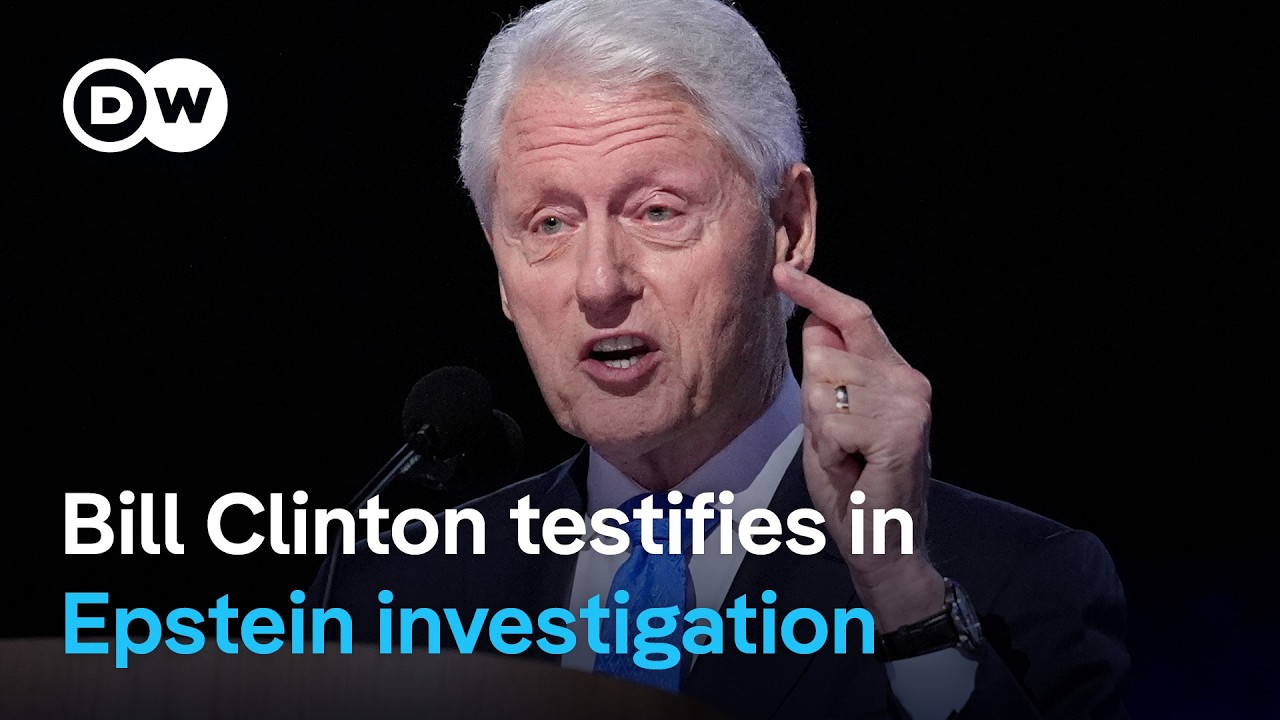
Bill Clinton's Staunch Defense: "Did Nothing Wrong" in Jeffrey Epstein Relationship
In a moment that garnered significant public and political attention, former President Bill Clinton delivered a resolute declaration to members of Congress: he "did nothing wrong" in his relationship with the late financier Jeffrey Epstein. This unequivocal statement came during a closed-door deposition, an unprecedented event that saw a former U.S. President compelled to testify before Congress. For hours, Clinton faced intense questioning over his connections to Epstein, a figure whose dark legacy continues to cast a long shadow over numerous high-profile individuals.
The former Democratic president firmly asserted that he "saw nothing" to suggest Epstein's illicit activities and had ceased all association with him long before Epstein's 2008 conviction for soliciting prostitution from an underage girl. This testimony aimed to address lingering questions and quell persistent speculation surrounding one of the most controversial figures of the 21st century. The public interest in the congressional grilling of Bill Clinton on Epstein ties underscores the deep desire for accountability in a scandal that has touched the highest echelons of society.
An Unprecedented Congressional Grilling: Scrutiny Over Two Decades
The deposition, held in the Clintons' hometown of Chappaqua, New York, was not merely a political formality; it was a historic occasion. For more than six hours, Bill Clinton engaged with lawmakers from the House Oversight Committee, primarily Republicans eager to probe the decades-old connection. This marked the first instance of a former president being compelled to offer testimony to Congress, highlighting the gravity and persistence of the Epstein scandal's impact.
The line of questioning extended beyond the simple fact of association. Lawmakers sought to understand the nature of the relationship, the duration of their interactions, and critically, what Clinton knew or observed about Epstein's behavior. The former president maintained that he observed no signs of Epstein's sexual abuse during their association, which he stated concluded prior to the 2008 conviction. This distinction is crucial, as much of Congress's current focus, as articulated by House Oversight Committee Chair James Comer, revolves around individuals who maintained relationships with Epstein *after* his legal troubles became publicly known and resulted in a conviction.
The intensity of the grilling also saw Bill Clinton's wife, former Secretary of State Hillary Clinton, undergo her own separate deposition the day prior. During her testimony, she reportedly stated that she did not remember ever meeting Epstein, providing a separate but related chapter to the family's engagement with the congressional inquiry. These depositions were initially resisted by the Clintons, who viewed them as politically motivated, but they ultimately agreed to testify to avoid potential contempt charges, underscoring the immense pressure exerted by Congress.
Navigating the Past: Memory, Candor, and Political Dynamics
In his opening statement, Bill Clinton acknowledged the difficulty of recalling specific details from events that transpired more than two decades ago. However, he expressed certainty regarding his lack of observation of any wrongdoing by Epstein. This element of memory recall under high-stakes scrutiny often becomes a focal point of such inquiries. While some Republican lawmakers, like Rep. John McGuire, suggested Clinton exhibited "selective memory," others offered a different assessment.
Republican Rep. James Comer, despite the committee's investigative intent, described Bill Clinton as "charming" during the questioning, while Rep. Nick Langworthy noted that Clinton was "quite candid, perhaps more candid than his attorneys were comfortable." These contrasting observations highlight the complex dynamics of such a high-profile deposition. It's a testament to Bill Clinton's long experience in public life and legal settings that he could navigate hours of questioning, satisfy some critics with his candor, and still maintain his core defense.
The challenge of memory over long periods is a common legal and psychological phenomenon. For public figures, the burden of proof often lies heavily on their recollections, especially when faced with accusations or intense public scrutiny. Clinton's assertion that he had stopped associating with Epstein by the time of his 2008 conviction provides a critical timeline, distinguishing his connections from those who continued ties even after Epstein's criminal activities became undeniable public record. Understanding the specific key questions asked inside the Clintons' Epstein depositions reveals the strategic approach of the congressional investigators.
Broader Implications: Accountability in the Epstein Saga
The inquiry into Bill Clinton's relationship with Jeffrey Epstein is part of a much larger, ongoing effort to establish accountability for those who enabled, ignored, or participated in Epstein's heinous crimes. Around the world, powerful individuals have seen their careers and reputations crumble due to their associations with Epstein, particularly those who maintained connections post-conviction. This context frames the congressional committee's sustained interest in anyone linked to the disgraced financier, regardless of their past prominence.
It is important to reiterate that Bill Clinton has not been accused of any wrongdoing in the Epstein case. Republican members of the House Oversight Committee did not immediately level accusations against the Clintons post-deposition, indicating their attention would mostly shift towards other individuals. This suggests that while questions persist, the direct investigative focus on Clinton may be winding down, at least for now.
The Epstein saga serves as a stark reminder for all public figures—and indeed, anyone in a position of influence—about the critical importance of due diligence in their associations. The company one keeps, especially when that company engages in illicit activities, can have devastating and long-lasting consequences, regardless of direct involvement. Maintaining transparent and ethical relationships is not just a moral imperative but a crucial aspect of safeguarding one's integrity and public trust.
Conclusion: A Persistent Search for Answers
Bill Clinton's assertion that he "did nothing wrong" in his relationship with Jeffrey Epstein and "saw no signs" of abuse marks a significant chapter in the sprawling Epstein scandal. His unprecedented testimony before Congress, characterized by both candidness and a firm denial of culpability, has provided his definitive public statement on the matter. While he has not been accused of any wrongdoing and the immediate congressional focus appears to be shifting, the intense public interest in the truth behind Jeffrey Epstein's network of powerful associates remains unwavering. The ongoing quest for accountability underscores a societal demand for justice and transparency, ensuring that no one, regardless of their past stature, is above scrutiny when it comes to such grave matters.